
Presumptuous Sin
A person with habitual sin in their life has likely taken God’s forgiveness for granted. It is easy to do. After all, we serve a God who is faithful to forgive. We serve a God who will leave His heavenly throne to become human and walk among His creation. Not only walk among us, but do so with the mission to die to save humankind from our fallen, corrupt state. We serve a God willing to sacrifice His only Son so that sinful creation may be saved. Isn’t this a God who will forgive?

Once, while Jesus was teaching, Peter, his disciple, asked him a question: “Lord, how often will my brother sin against me, and I forgive him? As many as seven times?” Peter’s choice of seven times was not arbitrary. In Hebrew culture, the number represents completion. In essence, the disciple’s question incorporated a cultural foundation of completed work (as in the seven days to complete creation) with the requirement of forgiveness. It may also be that Peter felt he was presenting an abundance of mercy, since, according to established Judaic religious tradition, forgiveness should be granted up to three times for one’s trespasses.
But Jesus clarified God’s position on the subject. The Teacher said, “I do not say to you seven times, but seventy-seven times.” Just as the number choice was pointed in the disciple’s question, so was the number seventy-seven specifically chosen in Jesus’ response. The Messiah put us on notice. Forgiveness is unrestrained by our cultural mores. It goes beyond them to total, absolute completion.
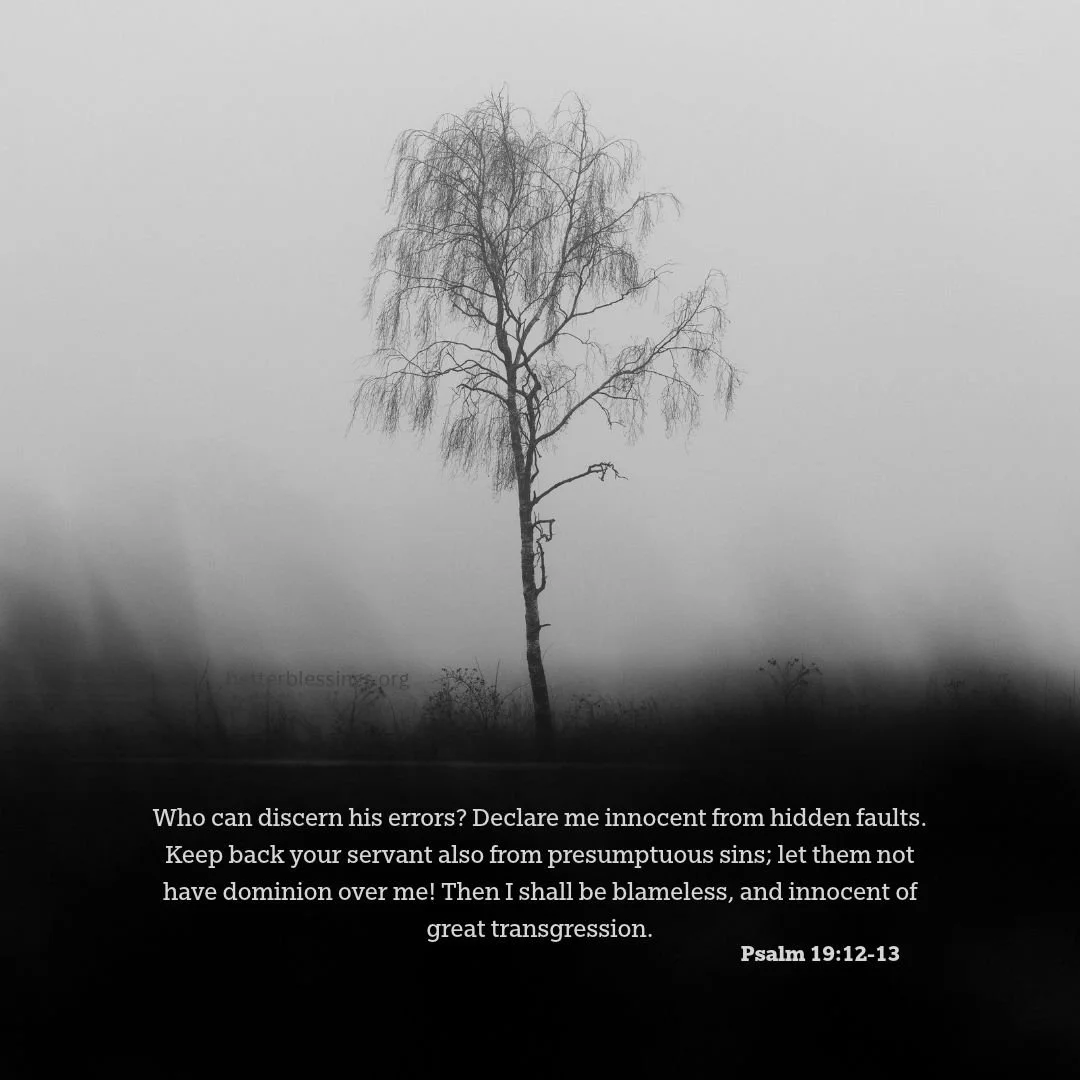
With this understanding of God’s view on forgiveness, let’s look at Psalm 19. In this psalm, King David of Israel asks God to keep him from “presumptuous sin.” He asks the Lord to prevent such sin from having “dominion over” him. From the scripture, it appears that the psalmist believed 1) presumptuous, or willful, sin had the power to dominate him if allowed to, and 2) that being kept from such sin would prevent its domination. In other words, once an individual allowed themselves to enter into presumptuous sin, they could fall under its dominion. But if a person, by the power of the Almighty, kept himself free from willful sin, that same sin could not dominate him. The remainder of the passage highlights another of the psalmist’s beliefs. David felt that if presumptuous sin did not dominate him, he would be “innocent of great transgression.” So this dominating sin also creates great transgression.
Habitual sin can be categorized under the presumptuous sin the psalmist refers to in this passage. It is sin that possesses, or dominates, the sinner. The transgressor is powerless to escape its influence, and temptation seems superfluous. The sinner willfully enters into transgression with little or no consideration of the consequences. All types of sin can become habitual if an individual will repeatedly yield to it.
We understand that God is all-merciful. When the law was implemented in the Old Testament, God’s Word tells us that sin increased. But as sin abounded, “grace abounded all the more.” Why? Because as“sin reigned in death” in righteousness, grace reigned to eternal life through Jesus Christ. God’s mercy and grace, which lead to the sinner’s forgiveness, crush the dominion of sin and death and draw a person to eternal life found in the Son of God.
But what if a person forsakes God’s grace for habitual sin? What if a person accepts the dominion of sin and rejects the dominion of a gracious Almighty Creator? “No one can serve two masters.” Accepting the domination of presumptuous sin eliminates one’s ability to accept the lordship of Jesus Christ. Accepting sin’s dominion leads to being dominated by a ruthless, malevolent, murderous tyrant. To reject the lordship of Christ is rejecting an eternal, loving Savior who willingly sacrificed Himself for you. It makes no sense, but millions of people choose this path. Why? Because the world is that deceptive, and we are that evil.
God loves us with an unquenchable love. He is willing and ready to forgive if we will ask. With all this on the right side of the ledger, what is the problem with habitual sin? What’s the problem with taking forgiveness for granted when we understand that God has granted it? The problem is that one who takes forgiveness for granted can’t receive it. Forgiveness must be granted, and it has to be received. The heart posture of a person who takes forgiveness for granted will not allow them to receive forgiveness given. Hence, the heart of a person in habitual, unrepentant sin is hardened against receiving the grace and forgiveness offered through our Lord Jesus.
But God, our Creator, provides a way. He directs us in the paths of righteousness. When a sinner repents of his sin, when he turns away from the dominion of habitual sin and runs to the Savior, the Lord Jesus Christ, the Almighty is ready and waiting to pour out forgiveness on that sinner. He is ready to accept such a person into His family. That soul becomes a child of God, and the Almighty becomes that child’s father.
